Radio sound engineers basically had to build a new acoustic vocabulary from scratch to represent things like rocket engines or alien environments inside a tiny studio. The recordings here trace how the genre moved away from 1930s kids' adventure serials toward adult psychological fiction during the post-war era.
You can hear the early era in daily cliffhanger broadcasts like Flash Gordon and Buck Rogers in the 25th Century. Both of these mid-1930s shows jumped straight from the newspaper comic pages to the microphone, depending entirely on fast pacing to capture younger audiences after school.
The post-war years changed the direction of the genre completely. Shows like Dimension X dropped the simplistic space opera tropes to focus heavily on atomic-age anxieties and hard technology. The section also includes major independent and network attempts to expand speculative fiction, such as Mutual’s 2000 Plus, CBS's short-lived Beyond Tomorrow, and Exploring Tomorrow, which featured established science fiction authors introducing the stories. You'll also find Destination Freedom, which used a biographical drama format to focus on civil rights and historical achievements.
You are WELCOME to enjoy our site & read ALL our books online. But to download & join our forum please create a FREE account or
login
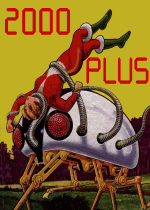
2000 Plus (aka Two Thousand Plus and 2000+) was an American old-time radio series that ran on the Mutual Broadcasting System from March 15, 1950 to January 2, 1952 in various 30-minute time slots. A Dryer Weenolsen production, it was the first adult science fiction series on radio, airing one month prior to the better known Dimension X. It was an anthology program, using all new material rather than adapting published stories. The series was the creation of Sherman H. Dryer (October 11, 1913-December 22, 1989) who scripted and produced the series with Robert Weenolsen (April 19, 1900-August 1979).
Dryer directed cast members Lon Clark, Joseph Julian, Henry Norell, Bill Keene, Bryna Raeburn and Amzie Strickland and others. Emerson Buckley conducted the music composed by Elliott Jacoby. Ken Marvin was the program's announcer, and the sound effects were by Adrian Penner.
In Science Fiction Television (2004), M. Keith Booker wrote:
"It was not until the 1950s that science fiction radio really hit its stride, even as science fiction was beginning to appear on television as well. Radio programs such as Mutual's 2000 Plus and NBC's Dimension X were anthology series that offered a variety of exciting tales of future technology, with a special focus on space exploration (including alien invasion), though both series also often reflected contemporary anxieties about the dangers of technology." (source: wikipedia)
Buck Rogers first appeared in Armageddon 2419 A.D. by Philip Francis Nowlan in the August 1928 issue of the pulp magazine Amazing Stories as Anthony Rogers. A sequel, The Airlords of Han, was published in the March 1929 issue. Philip Nowlan and the syndicate John F. Dille Company, later known as the National Newspaper Syndicate, contracted to adapt the story into a comic strip. After Nowlan and Dille enlisted editorial cartoonist Dick Calkins as the illustrator, Nowlan adapted the first episode from Armageddon 2419, A.D. and changed the hero's name from Anthony Rogers to Buck Rogers. The strip made its first newspaper appearance on January 7, 1929.
In 1932, the Buck Rogers radio program, notable as the first science fiction program on radio, hit the airwaves. It was broadcast in four separate runs with varying schedules. Initially broadcast as a 15 minute show on CBS in 1932, it was on a Monday through Thursday schedule. In 1936, it moved to a Monday, Wednesday, Friday schedule and went off the air the same year. Mutual brought the show back and broadcast it three days a week from April to July 1939 and from May to July 1940, a 30 minute version was broadcast on Saturdays. From September 1946 to March 1947, Mutual aired a 15 minute version on weekdays.
The radio show again related the story of our hero Buck finding himself in the 25th century. Actors Matt Crowley, Curtis Arnall, Carl Frank and John Larkin all voiced him at various times. The beautiful and strong-willed Wilma Deering was portrayed by Adele Ronson, and the brilliant scientist-inventor Dr. Huer was played by Edgar Stehli. It was produced and directed by Carlo De Angelo and later by Jack Johnstone. (Source: wikipedia.org)
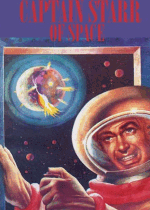
Captain Starr of Space ran from 2 June 1953 to 27 May 1954. The 30 minute show was broadcast on the American Broadcast Corporation network on twice weekly on Tuesdays and Thursdays. Each episode began with: "From out of the future comes Captain Starr of Space-Space-Space-ace-ace-ace ... "
The show is a typical vintage children's sci-fi series in the same vein as the more successful Tom Corbett Space Cadet and Space Patrol. He and his Space Rangers traveled the galaxy on their spaceship, the "Shooting Star." The show was based on characters created by Tom Hubbard, who wrote the episodes and played Cadet Sergeant Stripes.
Captain Starr was played by John Larch (October 4, 1914 - October 16, 2005), he also appeared on Space Patrol as Captain Smith. Before his acting career Larch was a pro baseball player. After Captain Starr he event he went on to have a long career as a bit player in both television and movies.
It is believed that a total of eight episodes survive, but only four appear to be publicly available.
Dimension X was an NBC radio program broadcast on an unsponsored, sustaining basis from April 8, 1950 to September 29, 1951. The first 13 episodes were broadcast live, and the remainder were pre-recorded. Fred Wiehe and Edward King were the directors, and Norman Rose was heard as both announcer and narrator (his famous opening: "Adventures in time and space... told in future tense...").
Preceded by Mutual's 2000 Plus (1950-52), Dimension X was not the first adult science fiction series on radio, but the acquisition of previously published stories immediately gave it a strong standing with the science fiction community, as did the choice of well established, respected writers in the field: Isaac Asimov, Robert Bloch, Ray Bradbury, Fredric Brown, Robert A. Heinlein, Murray Leinster, H. Beam Piper, Frank M. Robinson, Clifford D. Simak, William Tenn, Jack Vance, Kurt Vonnegut, Jack Williamson and Donald A. Wollheim. Ernest Kinoy and George Lefferts adapted most of the stories and also provided original scripts.
The series opened with "The Outer Limit", Ernest Kinoy's adaptation of Graham Doar's short story from The Saturday Evening Post (December 24, 1949) about alien contact. A week later (April 15, 1950), the program presented Jack Williamson's most famous story, "With Folded Hands", first published in the July 1947 issue of Astounding Science Fiction.
With a five-month hiatus from January 1951 to June 1951, the series spanned 17 months. All 50 episodes of the series survived and can be heard today. Later, NBC's X Minus One (1955-58) utilized many of the same actors and scripts. (source: wikipedia)
Flash Gordon started life as a hero of a science fiction comic strip originally drawn by Alex Raymond. First published January 7, 1934, it as inspired by and created to compete with the already established Buck Rogers strip.
Starting April 22, 1935, the strip was adapted into The Amazing Interplanetary Adventures of Flash Gordon, a 26-episode weekly radio serial. The series followed the strip very closely, amounting to a week-by-week adaptation of the Sunday strip for most of its run.
Flash Gordon was played by Gale Gordon, later famous for his television roles in Our Miss Brooks, Dennis the Menace, The Lucy Show and Here's Lucy (the latter two with Lucille Ball). The cast also included Maurice Franklin as Dr. Zarkov and Bruno Wick as Ming the Merciless.
The radio series broke with the strip continuity in the last two episodes, when Flash, Dale and Zarkov returned to Earth. They make a crash landing in Africa, where they meet Jungle Jim, the star of another of Alex Raymond's comic strips.
The series ended on October 26, 1935 with Flash and Dale's marriage. The next week, The Adventures of Jungle Jim picked up in that Saturday timeslot.
Two days later, on October 28, The Further Interplanetary Adventures of Flash Gordon debuted as a daily show, running five days a week. This series strayed further from Raymond's strip, involving Flash, Dale and Zarkov in an adventure in Atlantis. The series aired 74 episodes, ending on February 6, 1936. (Source: wikipedia.org)
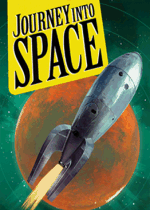
Journey Into Space is a BBC Radio science fiction programme written by BBC producer Charles Chilton. It was the last UK radio programme to attract a bigger evening audience than television. Originally, four series were produced (the fourth was a remake of the first), which was translated into 17 languages (including Hindi, Turkish and Dutch) and broadcast in countries worldwide (including Australia, the Netherlands, New Zealand and The United States). Chilton later wrote three best-selling novels and several comic strip stories based upon the radio series.
The first series was created in 1953, soon after Riders of the Range (a popular Western, also written by Chilton) ended its six series on the BBC Light Programme. Michael Standing, then Head of the BBC Variety Department, asked Chilton if he could write a sci-fi programme, and Journey to the Moon (later known as Operation Luna) was the result. Each half-hour episode would usually end with a dramatic cliffhanger, to increase the audience's incentive to tune into the next episode. (source: wikipedia.org)
Planet Man, targeted at kids, was produced by Palladium Radio Productions. It is: "... the fascinating story of Dantro, the planet man, trouble-shooter for the League of Planets Organization."
If you are wondering the League of Planets Organization is: "the law enforcement body for peace and justice in the celestial world." The headquarters is Planeria Rex "the capital of the planets".
So Planet Man (AKA Danto) is part of the popular 1950's space rangers genre. But he was not a human. He was in fact a humanoid which was handy for his dealings with Earth.
Other regular characters who appear in the show are: Dr. John Darrow and his daughter Pat, Jane and Billy and Slats his engineer.
Space Patrol is a science fiction adventure series that was originally aimed at juvenile audiences of the early 1950s via television, radio, and comic books. However, it soon developed a sizable adult audience such that by 1954, the program consistently ranked in the top 10 shows broadcast on a Saturday.
The success of the TV show spawned an almost instant radio version, which ran from 4 October 1952 to 19 March 1955 producing approximately 129 episodes. The same cast of actors performed on both shows. The writers, scripts, adventures and director had some crossover between the radio and TV incarnations however; the radio broadcasts were not limited by the studio sets and became more expansive in scope and story than the television versions. Although there was seldom any deliberate crossing-over of storylines, some of the television villains regularly appeared on the radio (notably Prince Bacarratti), and during the 'Planet X' story both the TV and radio versions explored the rogue planet's invasion of the Space Patrol universe.
While the radio series lacked the adult sophistication of sci-fi shows such as the later day X Minus One, it was enjoyed as a Golden Age space opera popularized in the 1930s, the days of science fiction's infancy, by pioneering magazine editor Hugo Gernsback and it is prized by "Old Time Radio" collectors today as one of radio's most enjoyable and fascinating adventures. Unfortunately only around 117 of the original broadcasts survive. (Source: wikipedia.org)
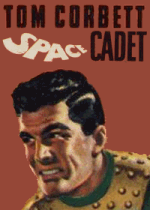
Joseph Lawrence Greene of Grosset & Dunlap developed Tom Corbett, Space Cadet, inspired by the Robert A. Heinlein novel Space Cadet (1948) but based on his own prior work. Greene had submitted a radio script for "Tom Ranger" and the "Space Cadets" on January 16, 1946, but it remained unperformed when Heinlein's novel was published. Greene then reworked his radio script into a script for a daily newspaper adventure strip, which was never produced.
Tom Corbett first appeared on television. The stories initially closely followed the scripts written for the unpublished newspaper comic strip Tom Ranger, Space Cadet, by Joseph Greene from 1949.
The stories followed the adventures of Corbett, Astro, originally Roger Manning and later T.J. Thistle, cadets at the Space Academy as they train to become members of the Solar Guard. The action takes place at the Academy in classrooms and bunkrooms, aboard their training ship the rocket cruiser Polaris, and on alien worlds, both within our solar system and in orbit around nearby stars.
The cast for the radio program was the same as for the television series. The show ran from January 1, 1952 - June 26, 1952, initially in 15-minute segments three times a week and then as a half-hour show twice a week. A radio version produced in Australia used local actors.
X Minus One was a half-hour science fiction radio drama series broadcast from April 24, 1955 to January 9, 1958 in various timeslots on NBC.
Initially a revival of NBC's Dimension X (1950-51), the first 15 episodes of X Minus One were new versions of Dimension X episodes, but the remainder were adaptations by NBC staff writers, including Ernest Kinoy and George Lefferts, of newly published science fiction stories by leading writers in the field, including Isaac Asimov, Ray Bradbury, Philip K. Dick, Robert A. Heinlein, Frederik Pohl and Theodore Sturgeon, along with some original scripts by Kinoy and Lefferts.
Included in the series were adaptations of Robert Sheckley's "Skulking Permit," Bradbury's "Mars Is Heaven", Heinlein's "Universe" and "The Green Hills of Earth", " Pohl's "The Tunnel under the World", J. T. McIntosh's "Hallucination Orbit", Fritz Leiber's "A Pail of Air", and George Lefferts' "The Parade".
The program opened with announcer Fred Collins delivering the countdown, leading into the following introduction (although later shows were partnered with Galaxy Science Fiction rather than Astounding Science Fiction).
The series was canceled after the 126th broadcast on January 9, 1958. However, the early 1970s brought a wave of nostalgia for old-time radio; a new experimental episode, "The Iron Chancellor" by Robert Silverberg, was produced in 1973, but it failed to revive the series. NBC also tried broadcasting the old recordings, but their irregular once-monthly scheduling kept even devoted listeners from following the broadcasts. (source: wikipedia)
CB+ Chat AI - At Your Service▼
CB+ ChatAI is training & may be inaccurate. In truth, it's a pathological liar. Do not trust it!
Mission: Our mission is to present free of charge, and to the widest audience, popular cultural works of the past. These are offered as a contribution to education and lifelong learning. They reflect the attitudes, perspectives, and beliefs of different times. We do not endorse these views, which may contain content offensive to modern users.
Disclaimer: We aim to house only Public Domain content. If you suspect that any of our material may be infringing copyright, please use our contact page to let us know. So we can investigate further. Utilizing our downloadable content, is strictly at your own risk. In no event will we be liable for any loss or damage including without limitation, indirect or consequential loss or damage, or any loss or damage whatsoever arising from loss of data or profits arising out of, or in connection with, the use of this website.
CB+ Chat AI - At Your Service▼
CB+ ChatAI is training & may be inaccurate. In truth, it's a pathological liar. Do not trust it!


 Radio sound engineers basically had to build a new acoustic vocabulary from scratch to represent things like rocket engines or alien environments inside a tiny studio. The recordings here trace how the genre moved away from 1930s kids' adventure serials toward adult psychological fiction during the post-war era.